
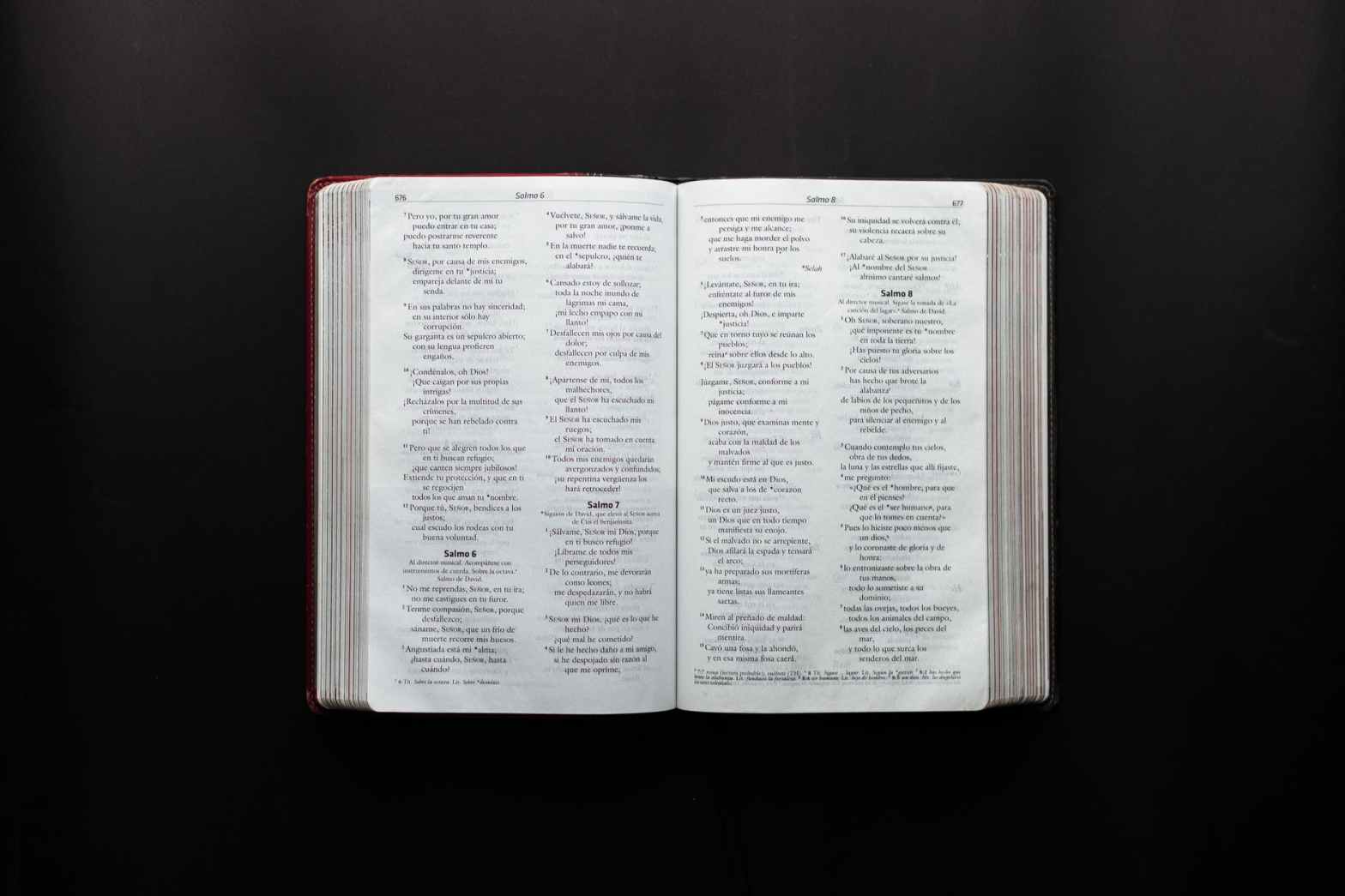
There is a quiet irony in much of modern Christian publishing. We have more devotional material available to us than almost any generation in church history, and yet many Christians know their Bibles less well than previous generations did.
That is not because devotional books are bad. Far from it. Many are rich, faithful, Christ-centred, pastorally wise, and spiritually nourishing. The Lord has used daily reading notes, devotional commentaries, Bible-in-a-year helps, prayer guides, and short reflections to encourage countless believers. Many Christians can testify that a particular devotional book helped them through suffering, rekindled their prayer life, or opened up a Bible passage they had previously struggled to understand.
So this is not an argument against devotional material. It is a plea to use it well.
The danger is not that Christians read devotionals. The danger is that we begin to treat them as a substitute for reading Scripture itself. The danger is that we slowly become content with someone else’s digested thoughts about the Bible, while rarely learning to feast on the Bible for ourselves.
When help becomes a hindrance
Good devotional material is meant to serve our reading of Scripture, not replace it. It should be like scaffolding around a building: useful, supportive, temporary, and never mistaken for the building itself. But sometimes the scaffolding becomes the structure.
We open the booklet, read two or three verses, skim the reflection, nod at the application, say a quick prayer, and move on. We have had a ‘quiet time’, but have we actually listened to God’s Word? Have we wrestled with the text? Have we asked what the passage means in context? Have we considered how it points to Christ, fits into the grand story of redemption, confronts our sin, strengthens our faith, and equips us for obedience?
The apostle Paul tells Timothy that “all Scripture is breathed out by God and profitable” (2 Timothy 3:16). Not some Scripture. Not merely the parts that lend themselves to a neat thought for the day. All Scripture. The genealogies, the laws, the laments, the prophets, the wisdom literature, the Gospels, the epistles, Revelation — all of it is God’s Word, and all of it is given for our good.
Yet bite-sized devotional reading can train us, unintentionally, to approach the Bible as a collection of inspirational fragments rather than as one unfolding revelation of God’s saving purposes in Christ. We may learn to ask, “What’s my thought for today?” before we ask, “What has God said?”
The problem of spiritual spoon-feeding
Every pastor knows the joy of seeing a new Christian helped by simple Bible notes. That is a good thing. New believers need support, encouragement, and guidance. There is nothing mature about pretending we do not need help.
But there is a difference between being helped and being spoon-fed indefinitely.
The writer to the Hebrews rebukes his readers because, by that stage, they “ought to be teachers,” yet still need someone to teach them “the basic principles of the oracles of God” (Hebrews 5:12). They still need milk, not solid food. Their problem is not that they used resources. Their problem is that they had not grown in spiritual discernment through constant practice.
That phrase matters “constant practice” (Hebrews 5:14). Christian maturity does not come merely by consuming Christian content. It comes through prayerful, humble, obedient engagement with the Word of God. We grow as we learn to read carefully, think biblically, repent honestly, believe deeply, and obey practically.
There is a kind of devotional reading that can make us passive. Someone else has done the thinking. Someone else has made the connections. Someone else has drawn out the application. We simply receive the finished product. Again, that may be helpful, but if that becomes our only pattern, we may never develop the muscles needed to handle Scripture well.
The result is a generation of Christians who may have many favourite devotional quotes, but little confidence in opening Leviticus, Ezekiel, Romans, or Revelation and asking, “What is God saying here?”
Losing the big story
One of the great losses in a devotional-only diet is that we can lose sight of the Bible’s great metanarrative – creation, fall, promise, covenant, redemption, kingdom, exile, fulfilment in Christ, the mission of the church, and the hope of new creation.
The Lord Jesus taught that all Scripture ultimately bears witness to him (Luke 24:27, 44; John 5:39). The Bible is not a jar of spiritual fortune cookies. It is the unified testimony of God’s redemptive work, centred on Christ crucified, risen, reigning, and returning.
But if we only ever read small sections detached from their context, we may begin to flatten the Bible. David and Goliath becomes a lesson in facing our giants. Noah becomes an example of courage. Esther becomes a reminder to be brave. These applications may contain elements of truth, but if we stop there, we miss the deeper realities of God’s covenant promises, human sin, divine judgment, substitution, providence, deliverance, and the coming King.
The Bible certainly speaks to our daily lives. But it does so much more deeply than giving us an encouraging sentence to carry into the day. It gives us a whole world to live in. It tells us who God is, who we are, what has gone wrong, what Christ has done, what the church is, where history is going, and how we are to live as pilgrims awaiting the city to come.
A thin devotional diet may warm the heart for a moment. The whole counsel of God transforms the mind, anchors the soul, and shapes a life.
The Berean instinct
In Acts 17, Luke commends the Bereans because “they received the word with all eagerness, examining the Scriptures daily to see if these things were so” (Acts 17:11). Notice both parts – eagerness and examination. They were not cynical. They were hungry. But they were also discerning. Even apostolic preaching was tested against Scripture. That is a model we desperately need.
Christian publishers, writers, pastors, and devotional authors can serve the church wonderfully. But no human author is infallible. Every devotional thought, however moving, must be tested by the Word of God. The question is not, “Did this make me feel encouraged?” but, “Is this true? Is this what the passage actually says? Does this lead me to Christ? Does this call me to faithful obedience?”
The more dependent we become on pre-packaged reflections, the more vulnerable we may become to shallow interpretation, sentimental application, and doctrinal drift. Discernment grows when Christians know their Bibles.
A better way to use devotionals
So should we throw away our devotional books? No. But we should put them in their proper place.
Read the Bible passage first. Slowly. More than once. Notice repeated words. Ask what comes before and after. Identify the genre. Look for the main point. Ask what the passage reveals about God, humanity, sin, grace, Christ, the church, and the Christian life. Pray as you read. Then, after you have spent time in the text, use the devotional material as a conversation partner, not as a replacement teacher.
Ask yourself – did the devotional help me understand the passage better, or did it merely use the passage as a springboard for a thought? Did it lead me back into Scripture, or away from it? Did it deepen my love for Christ, my grasp of the gospel, my hatred of sin, my hunger for holiness, and my hope of glory?
For some Christians, it may be wise to set aside devotional notes for a season and simply read through whole books of the Bible. Take Mark’s Gospel and read a chapter a day. Work slowly through Ephesians. Read Genesis with the promises of God in mind. Read Exodus looking for redemption, sacrifice, dwelling, and glory. Read the Psalms as prayers shaped by God himself. Read Romans with a notebook open and a pen in hand.
Do not be afraid of finding the Bible difficult. Some parts are difficult. Peter admitted that some of Paul’s writings are “hard to understand” (2 Peter 3:16). But difficulty is not a sign that Scripture has failed. It is often the invitation to slow down, think harder, pray more deeply, and seek help from the church.
Publishers, pastors, and ordinary Christians
Those of us who write, publish, preach, and recommend resources have a responsibility here. We must not train Christians to be permanently dependent on us. The best devotional material should create Bible readers, not devotional addicts. It should sharpen appetite for Scripture, not dull it. It should model faithful handling of the text, not bypass it.
Pastors should teach people how to read the Bible, not merely tell them that they should. Churches can help by running simple Bible-handling sessions, encouraging whole-book reading, modelling expository preaching, and giving people confidence that ordinary Christians can truly understand God’s Word.
And ordinary Christians should recover the joy of direct engagement with Scripture. You do not need a theology degree to read the Bible faithfully. You need humility, prayer, the help of the Holy Spirit, the fellowship of the church, and a willingness to listen carefully to what God has actually said.
The same God who breathed out Scripture also uses Scripture to make his people wise for salvation through faith in Christ Jesus (2 Timothy 3:15). He has not given us his Word to confuse us, starve us, or keep us dependent on experts. He has given it to reveal himself, to lead us to Christ, to sanctify us, and to equip us “for every good work” (2 Timothy 3:17).
Do not settle for crumbs
Devotional material can be a gift. But even good gifts can be misused. If our devotional habits are making us passive, fragmentary, shallow, or dependent, then something needs to change.
Do not settle for crumbs when the Lord has set a feast before you.
Use devotionals gratefully, but read Scripture eagerly. Receive help humbly, but examine the Bible daily. Enjoy short reflections, but do not lose the grand story. Let devotional material take you by the hand and lead you into the text and if it does not, perhaps it is not serving you as well as it should.
The goal is not to become impressive Bible experts. The goal is to know Christ, love Christ, trust Christ, obey Christ, and become more like Christ. And for that, God has given us something better than any devotional booklet.
He has given us his living and abiding Word.


One thought on “Could Your Devotional Material Be Hindering Your Spiritual Growth?”