“The Spirit-empowered and Spirit-gifted resurrection body will make our current bodies appear almost lifeless.”
Derek Thomas, Heaven On Earth: What the Bible Teaches about Life to Come
“The Spirit-empowered and Spirit-gifted resurrection body will make our current bodies appear almost lifeless.”
Derek Thomas, Heaven On Earth: What the Bible Teaches about Life to Come
Over the years I have become quite passionate about evangelism, this is because of the vast crowds of people in this world who don’t know Jesus, and it’s also because I know that I suck at evangelism!
Evangelism is difficult, this or something similar has probably been said by every Christian at some point or another in their lives. However, is this true or is it because we need a shift in our thinking?
Generally speaking, I think we do need a shift in our thinking but it is also true that evangelism is hard. Today many people think that Evenglism means the running of Christian events like courses, crusades, missions… But the biggest temptation is to take these tools, things that assist our evangelism but aren’t evangelism themselves, and treat them as the real deal.
Another temptation is to go on the defence and use apologetics in evengelism, arguing for or defending Christianity, instead of simply telling people about Jesus. This has resulted in many people feeling incapable of evangelising because they don’t “know all the answers”. Let me tell you a secret, you can have all the degrees in the world and still not understand the depths of the magnificent mystery that is the gospel!
Jesus didn’t do any of this in his evangelism, do you know how Jesus evangelised? He proclaimed the message “repent and believe in the gospel” Mark 1:15.
Don’t get me wrong, I’m not saying that all these tools for evangelism and apologetics aren’t good, each of them have their time and place. But, we cannot let these be the only means by which we ‘evangelise’.
First and foremost evangelism is a declaration of who Jesus is, what he has done on the cross and what that means for people today. People need to know that they are lost, they need to know their problem, and they also need to know their solution….. Jesus!
I find it so mind boggling that God would use a fallen and corrupt individual, like me and like you, to do his work of spreading the gospel, that is what we are all called to do.
Instead of waiting for the right courses to come up, instead of reading all the apologetics books under the sun, let’s go and declare the good news of Jesus to our family, our friends and ultimately to the world.
A big temptation might be to ‘gloss up’ the gospel, to make it seem a bit more pleasant, to make Jesus more attractive. But in every attempt to do this we are effectively saying, albeit in our minds and hearts, that the gospel isn’t good enough for the world, it isn’t really good news.
Jesus didn’t mince his words, he told people what he knew their souls needed to hear and not what their ears wanted to hear. Do we do the same?
The goal of a Christian is to be more like Jesus everyday, let’s strive to do that in our evangelism too.
Let’s do what Jesus has commanded us to and to “go and make disciples of all nations, baptizing them in the name of the Father and of the Son and of the Holy Spirit, and teaching them to obey everything I have commanded you. And surely I am with you always, to the very end of the age.”
Matthew 28:19-20.
This is our command and this should be our passion and desire, to see the name of God glorified by having people hear the good news and respond in thankfulness as they are made right with God.
“All our striving and longing and yearning points to an existence that transcends the brokenness of our present lives.”
Derek Thomas, Heaven On Earth: What the Bible Teaches about Life to Come
“Christians die with courage because they die with confidence.”
Derek Thomas, Heaven On Earth: What the Bible Teaches about Life to Come
Have you every asked the question, what is the point of my suffering?
I know that I have….
In 2013 I came down with a chronic illness which means I am in constant pain, I can’t sleep and my general health suffers as a result of this illness. When the doctors told me that there was nothing they could do, they can’t take away my pain, I did what every book worm would do; I dove into reading books on suffering, from Christian perspective.
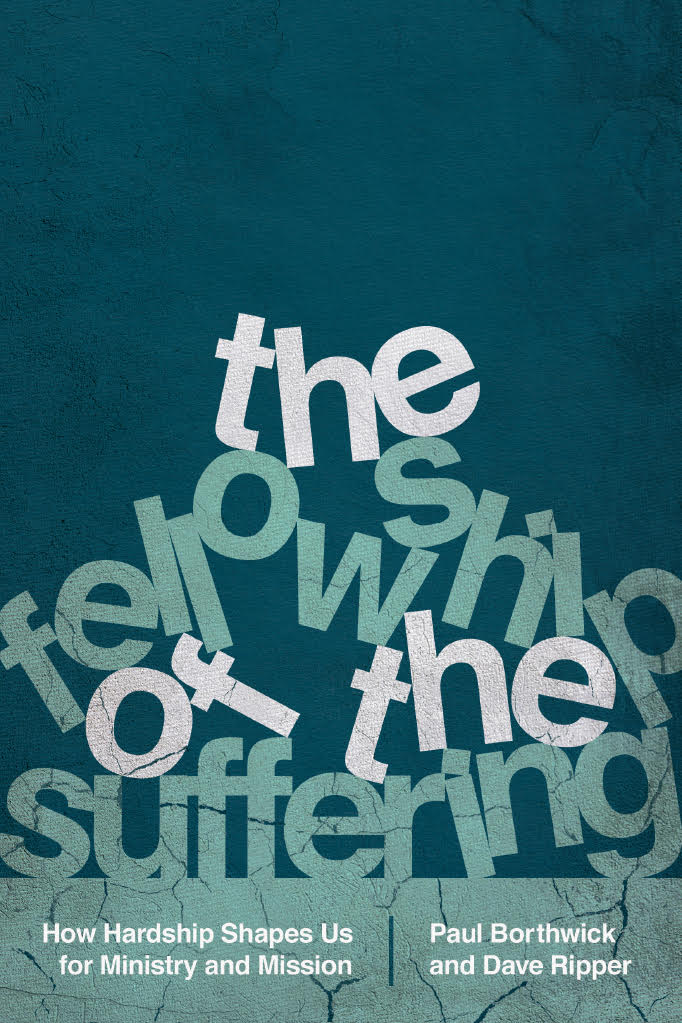
The fellowship of the suffering is one of those books, it deals with suffering, our perception of suffering and some practical steps which have helped the authors as they have suffered.
My problem with many of the ‘suffering books’ that can be found on many bookshelves is that they have this kind of ‘it’ll all be ok, one day, just keep praying’ idea, whilst that is true, and I eagerly await my new creation body, it’s like giving Calpol to someone who has been shot.
It won’t help much.
One of the things that I like about this book is that the authors share their own stories of suffering, and they go beyond the physical. Often we focus on physical suffering but completely forget about emotional suffering by saying ‘it’s part and parcel of being in a fallen world’ whilst this is true we still need to care for people through their emotional suffering.
As with any book, I do not agree with everything that it says, but it is a helpful book that takes you through some of the ‘stages’ of suffering. One of the things the book does really well is that it explains how our suffering, as hard as it might be, can teach us things.
The authors pull on other materials and books written about suffering and use quotes from many different people, this is often a helpful thing because these quotes and footnotes can take you to the stories of other Christians that can leave a lasting impression on your life because of how they ‘suffered well’.
One of the things that the fellowship of the suffering does, which not every book on suffering does, is that it deals a lot with the Bible and how people in the Bible suffered. The Bible, in my mind and theology, is e first place that every Christian should go when thinking about any topic and it’s a joy to see that happening in this book more than in others that I’ve read.
If you are suffering, if you are in either physical or emotional pain run to God, turn to God and speak to someone. My wife has been my rock through my sufferings, and she continues to support me, find someone to talk to. Find a person who is willing to live with you in your pain and talk to them about the ups and downs, the good and the bad days, and call on the Lord together.
Would I recommend this book? Yes.
Does it give a whole new perspective on how to ‘suffer well’? No.
Does it point people to Jesus and encourage people to find their refuge in God? Yes.
Rating 3/5
“God is not only the supreme being. He is also the one through whom all others have their being.”
Chad Van Dixhoorn, Confessing the Faith
“Prayer might be the last thing we feel like doing when we’re suffering, but it’s arguably the most important. Praying through suffering—our own and that of the world—brings us into closer communion not only with God but with his people throughout the world.”
Paul Borthwick & Dave Ripper, The Fellowship of Suffering
“I can no longer condemn or hate a brother for whom I pray, no matter how much trouble he causes me. His face, that hitherto may have been strange and intolerable to me, is transformed in intercession into the countenance of a brother for whom Christ died, the face of a forgiven sinner.”
Dietrich Bonhoeffer, Life Together: The Classic Exploration of Christian Community
On the 15th of April 2018 Pope Francis visited a housing estate on the outskirts of Rome, upon his visit he was met by crowds of people and one boy in particular has captured the hearts of many people around the world. Emanuele asked the Pope if his father, who was not a believer, was in heaven. The Pope went on to say that surely his father was in heaven because he was a good man, had his children baptised and saying that God did not abandon His children.
Here is why I think that the Pope said is dangerous, and why I’ll take Jesus’ word over who will be in heaven over the Pope’s.
The reason the Pope’s words are dangerous is because, whether he knows it or not, thousands if not millions of people look to the Pope for their understanding of Christianity. Therefore, based on his comments the other day, people could deduce that if they are good and get their children baptised that they themselves become children of God and will be allowed into heaven.
Articles have been written praising the Pope’s inclusiveness and people are sharing posts on social media about this most recent Francis moment, and the problem is that this is portraying a wrong picture of Christianity and it is sowing seeds of false hope.
Here is what Jesus has to say on the matter…
During Jesus’ life He never elevated religious practices beyond what they were, he never gave people false hope because it was seen as the ‘nice thing to do’, Jesus spoke very directly to people about the reality of what happened to those who did not turn and believe in Him.
Take the beginning of Luke 13, for example, people report the deaths of some people to Jesus and he quashes any idea that this was a judgment because they are more sinful than other and responds twice with these direct but true words “But unless you repent, you too will all perish” Luke 13:3 and 13:5.
Or, just further on in Luke 13 in verses 22-30 Jesus answers the question ‘will those who are saved be few?’ In response to this question Jesus doesn’t burst into a ‘hell fire and brimstone sermon’ but he responds with an illustration. Jesus says that the way to salvation, meaning to be made right with God and to spend an eternity with Him in heaven, is a narrow door and people need to strive to enter by it. Those who do not strive to enter through this door and who miss their opportunity might stand and knock and beg to be let in, but they will be cast out into the place that we know as Hell (described in verse 28).
The only way a person can be saved, be in a right relationship with God and be freed from the rightful punishment of their sins, is to believe in Jesus, to repent and be forgiven by Him. That is the one true hope, that is the truth of Christianity and that is the abounding Grace of God.
These two messages are completely different, one says that heaven is an open door for nice people, and the other says that heaven is not a door that you can stumble across.
I’ll take Jesus’ word for it because it is only through Him that passage into heaven is granted through His sacrifice on the cross, and I’d warn people of the Pope’s message because it sows the seed of false hope for people who give no second thought to God in their lives.
“For all the skepticism that abounds in our time , people still want to know what happens after death.”
Derek Thomas, Heaven On Earth: What the Bible Teaches about Life to Come