
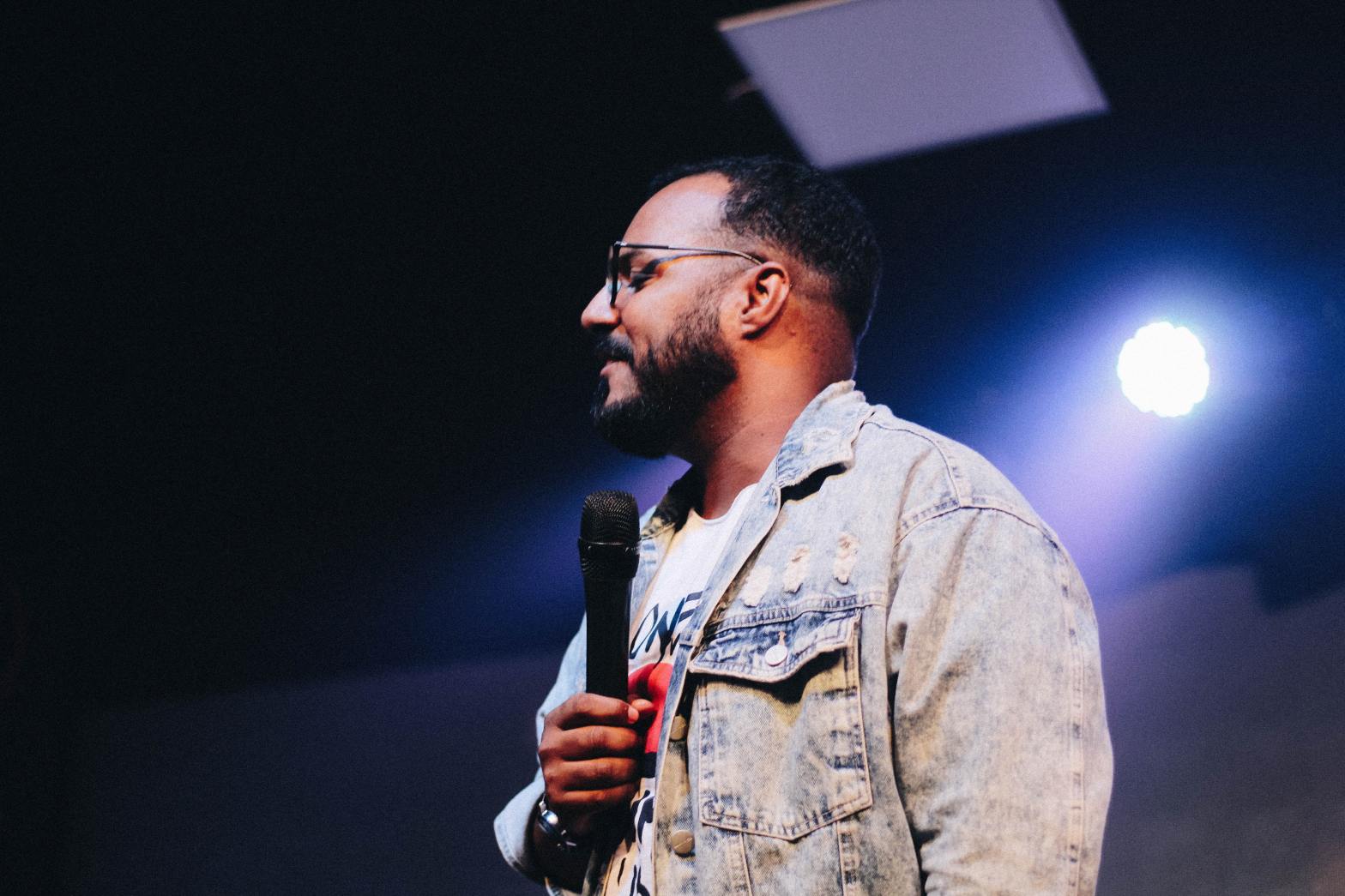
Over the past year, I’ve received more positive feedback on my writing and, perhaps more significantly, on my preaching.
That has made me wonder: what changed?
I don’t think I suddenly became more theological. I don’t think I discovered some hidden preaching technique. I haven’t spent hours crafting clever sound bites or trying to manufacture memorable quotes.
But I have changed the way I write.
For years, I wrote sermons and articles largely the way I spoke. I put thoughts onto the page as they came into my head. Sentences were often long. Grammar was occasionally negotiable. Illustrations could become elaborate. Paragraphs could wander. The point might eventually arrive, but sometimes it had to fight its way through a lot of words to get there.
Over the last year, I’ve increasingly tried to write like a writer.
And I think it has made me a better writer, and a better preacher.
Clarity matters because truth matters
There can sometimes be a strange suspicion of good communication in Christian circles. We rightly reject manipulation, showmanship and personality-driven ministry, but we can accidentally begin to think that careful communication is somehow worldly.
It isn’t.
The Apostle Paul says, “If the trumpet does not sound a clear call, who will get ready for battle?” (1 Corinthians 14:8). His immediate context is intelligibility in gathered worship, but the principle is obvious: communication that cannot be understood is communication that fails.
Christian preaching is not about displaying how much the preacher knows. It is about helping people understand what God has said. That means clarity is not merely a stylistic preference. It is an act of love.
If I have spent fifteen hours preparing a sermon but the congregation cannot explain the main point by lunchtime, I may need to ask whether all fifteen hours were spent wisely.
The same applies to writing. Deep truth does not require complicated sentences. Sometimes the clearest sentence is the strongest sentence.Sometimes fewer words carry more weight.
Short sentences can make truth stick
One of the biggest changes I’ve made is intentionally shortening my sentences.
Not every sentence, of course. Writing becomes exhausting if every line sounds like a slogan. But I have become far more willing to stop.
To use the full stop.
To let a sentence stand.
To allow an important truth to breathe.
For example, rather than saying:
“Because Christians have been united to Christ through faith and therefore possess an entirely new identity which reshapes every aspect of their lives, we should recognise that holiness is not an optional extra for the particularly committed Christian.”
You might simply say:
“We belong to Christ. So holiness is not optional.”
The theology has not become shallower. It has become clearer.
Jesus himself often taught with extraordinary economy. “You cannot serve both God and money” (Matthew 6:24). “Take up your cross and follow me” (Matthew 16:24). “Apart from me you can do nothing” (John 15:5).
Simple sentences. Enormous truths. We should not confuse complexity of language with depth of thought.
Don’t chase the perfect sound bite
There is, however, a danger here.
Once you begin thinking about memorable sentences, you can start trying too hard.
Every paragraph becomes an attempt to create the next quotation graphic. Every sermon begins sounding like a collection of social-media captions. The preacher stops explaining the Bible and starts auditioning for clips.
That is not the goal.
I rarely spend ages searching for the perfect punchy sentence. In fact, when you try too hard to be memorable, you often become irritating. The best memorable lines usually emerge from clear thinking.
If you know what you want to say, and you remove unnecessary words, the sentence often becomes memorable by itself.
Clarity produces punch. You do not need to manufacture it.
Use illustrations, but don’t let them take over
Another change I’ve made is using more illustrations, but making many of them shorter.
In the past, I might have developed a single illustration for several minutes. Now I often use several smaller ones, perhaps only a sentence or two long.
A long illustration can be powerful. Jesus told stories, after all. There is certainly still a place for them. But illustrations can also become the thing people remember instead of the truth they were intended to illuminate.
A short image can sometimes do more.
“Sin is not a pet to be managed. It is an enemy to be killed.”
“Trying to earn God’s favour is like attempting to pay off a billion-pound debt with pocket change.”
“The church is not a theatre where Christians watch professionals perform. It is a body in which every member belongs.”
The illustration does not need to become a story. Sometimes it simply needs to open a window. Then get out of the way.
Write for the ear, not just the eye
This has been especially important for preaching. A blog can be reread. A sermon cannot.
When someone reads an article and loses the thread, they can go back a paragraph. When someone listening to a sermon loses the thread, the preacher keeps going.
That means sermon writing should be written for hearing.
Read your manuscript aloud. If you run out of breath, the sentence is probably too long. If you stumble over the wording, the congregation may stumble over the meaning. If the sentence makes perfect sense on paper but sounds unnatural when spoken, rewrite it.
Paul asks the Colossians to pray that he would proclaim Christ “clearly, as I should” (Colossians 4:4).
That is a good prayer for every preacher. Not merely, “Lord, help me say true things.” But, “Lord, help me say true things clearly.”
Know where you are going
Another lesson I am learning is that good writing requires ruthless clarity about the main point.
Before writing the sermon, finish this sentence: “The main thing I want people to understand is…”
Then perhaps another: “The main thing I want people to do is…”
If you cannot answer those questions simply, you probably are not ready to begin writing. The same applies to articles.
What is the article actually about? Not broadly. Specifically.
One of the easiest ways to weaken writing is to try to say everything. You cannot. And you should not. Ecclesiastes tells us that “the words of the wise are like goads” (Ecclesiastes 12:11). A goad has a point.
Good preaching should too.
Cut what you love
This may be the hardest lesson. Sometimes the paragraph you most enjoyed writing needs to disappear. Sometimes the clever illustration does not serve the sermon. Sometimes the theological aside is interesting but unnecessary. Sometimes you have done two hours of research that simply does not belong in the finished product.
Delete it.
The purpose of preparation is not to prove that preparation happened. The congregation does not need to hear everything you discovered. They need to hear what helps them understand and respond to the text.
Writers often talk about “killing your darlings”: removing sentences you love because they weaken the whole. Preachers need to learn the same discipline. Not everything good belongs in this sermon.
Use concrete language
Another simple improvement is to replace vague language with concrete language.
We often preach in abstractions “Prioritise your spiritual walk.”
What does that mean? Perhaps say “Open your Bible before you open your phone.”
Or
“Pray with your spouse tonight rather than merely intending to become a more prayerful couple.”
Application becomes powerful when people can picture it. The Bible does this constantly.
“Flee from sexual immorality” (1 Corinthians 6:18).
“Carry each other’s burdens” (Galatians 6:2).
“Do not let the sun go down while you are still angry” (Ephesians 4:26).
Biblical application frequently has verbs. So should ours.
Vary the pace
Good communication has rhythm. Some ideas need explaining slowly. Others need stating quickly. A paragraph can build. Then stop.
A long sentence may gather several thoughts together before a short sentence delivers the conclusion.
That is how people naturally listen. Monotony kills attention. If every sentence is the same length, every paragraph the same shape, and every section the same tone, even excellent content can become difficult to hear.
Variation helps people stay with you. Not because we are entertaining them. Because we are serving them.
Repeat the important things
Preachers sometimes fear repetition because we know we have already said something. The congregation may not. In fact, they probably do not.
The main point should appear more than once.
Say it.
Explain it.
Illustrate it.
Apply it.
Say it again.
Moses repeatedly reminded Israel of the same truths. The Psalms repeat truths in parallel lines. Paul tells the Philippians that repeating himself is “no trouble” for him and is “a safeguard” for them (Philippians 3:1).
Repetition is not necessarily poor writing. Unnecessary repetition is. Intentional repetition is often excellent teaching.
Read good writers and listen to good preachers
Writing improves by writing, but it also improves by reading.
Notice what good writers do. How quickly do they get to the point? How long are their paragraphs? Where do they place their strongest sentences? How do they transition between ideas?
Likewise, listen carefully to good preaching. Not merely “Was that sermon helpful?” Ask why.
How did the preacher introduce the passage?
How did they explain difficult ideas?
Where did they illustrate?
How did they move from explanation to application?
How often did they restate the main point?
We should never imitate another preacher’s personality. God does not need ten thousand copies of the same man. But we can learn from one another’s craft.
Most importantly, know what words are for
There is a danger in any discussion about writing and preaching techniques. We can begin thinking the goal is to become impressive communicators.
It is not.
The Christian preacher has a far greater ambition. Paul tells Timothy, “Preach the word” (2 Timothy 4:2). He tells the Corinthians, “What we preach is not ourselves, but Jesus Christ as Lord” (2 Corinthians 4:5).
Words matter because God has chosen to reveal himself through words. Preaching matters because through the faithful proclamation of his Word, Christ is held out before sinners and saints.
So we work at communication. We shorten sentences. We sharpen applications. We cut unnecessary paragraphs. We choose useful illustrations. We labour over clarity.
Not because we want people leaving church saying, “What a preacher.” But because we want them saying, “What a Saviour.”
The goal is not memorable preaching for its own sake. The goal is memorable truth.
If writing like a writer helps people see Christ more clearly, understand Scripture more deeply, remember truth more readily and obey God more faithfully, then it is worth the work.
Because ultimately, the preacher’s task is not to make much of his words. It is to use his words to make much of Christ.


Great word Alistair. I’ve noticed many for these in myself as well, not just in the short term of focussing on my writing more seriously but also in the long years of writing and preaching.
I’d recommend William Zinsser’s “On Writing”, if you’ve not read it already too.
LikeLiked by 1 person