Take Heart

There is no denying that Christianity, at least in the West, is taking a bit of a hit. Christians are being called bigots, fundamentalists and judgemental. The church is no longer seen as the compass of morality, and in this world ,were to offend people seem to be the worst crime, those who do not agree with the church and the teachings of Scripture are marginalised.

There used to be a time when Christianity was at the centre of our society. It was seen as normal to be a Christian, but this time is long gone. Today we live in what conference speakers and authors call a ‘post-Christian culture’, today it is no longer seen as the ‘norm’ to be a Christian or to go to church. Rather, Christians can be seen as strange or bigoted because of our stance on what the bible teaches.

“Unless you want to place your head in the sand and leave it there, there’s no denying the fact that fewer and fewer people are claiming to be Christians throughout the West, and that Christians are losing social status and favor more and more, almost by the day.”

How should Christians deal with this truth? Should we run and hide, lock our church doors and hope for the best? Or should we do, what some have sadly already done, and conform to society?
Matt Chandler says that as we look at our culture, as we see how the church seems to be more and more marginalised, Christians should Take Heart. In these times of change and as the church gets pushed closer and closer to the edge of society Chandler calls Christians to have courage.

How is that possible you might ask? Well Chandler takes you through church history and he calls the reader to look up to God, to see and know that He is sovereignly in control of all things.

Church history shows that the church has grown and thrived most during times of pressure and marginalisation and has actually deteriorated and become more self-focused rather than Christ-focused during time when society was ‘Christian’.
The church thrives in the margins because it causes Christians to look and depend on God and to find their hope and courage in God. As you feel the pressure at work, as you’re questioned by friends or family members because of your faith or as you take a stance because of what you believe, the bible teaches look to God and take courage!

We can have courage when we have a great view of our great God because as Chandler says:

“if we have a God-sized, God-given courage, then we will be freed up to be the people of God, living out the mission of God, marked by the joy of God.”

This is a very helpful quick read that puts our culture in its context, helps us understand church history and gives practical insights into how to live as a Christian in a world that is trying to fight Christianity and forget about God. If you are struggling this book will give you hope, it will cause you to look to and depend on God and, as it says on the tin, it will give you courage to live in this world and age of unbelief as you serve the Lord.

Rating 4/5

Always use the Bible…

As a Christian my go to book is always the Bible.
If someone has a question, we look at what does the Bible say on that particular topic.
If someone is troubled by something, we look at what the Bible has to say on that particular topic.
If someone is trying to make a decision, we look at what the Bible has to say on that particular topic.

I have the privilege of spending the majority of my time throughout the week reading the Bible. I read the Bible for my own personal devotional life, for Bible study prep, for sermon prep and for meeting one on one with others. Why do this?

I do this because I believe that the Bible is the Word of God, it is God’s revelation of Himself given to humanity so that we may know Him. Therefore, when I meet with somebody my priority is to read the Bible with them, to let God do the talking.

I’ll also talk about life with the person and get to know their struggles and their lives. But the primary concern for every Christian should be to open the Bible.

Why? Because in the Bible we hear God speaking, in the Bible we have the Word of God that is “breathed out by God and profitable for teaching, for reproof, for correction, and for training in righteousness” (2 Timothy 3:16).

If Christians don’t use the Bible to do these things (teach, reprove, correct and train) then we end up trying to use our own words and advice.

Do we really know better than God does?

The Bible is the main authority over a Christian’s life and we should be using it in every circumstance we can.
This should stops us from giving bad advice, from jumping on our hobby horse topics and from keeping the focus on ourselves. Instead, the Bible lifts our eyes up to see the glory of God and the magnificence of the gospel through Jesus.

The Bible makes us to ask difficult questions and that can sometimes be uncomfortable, but it is also encouraging.
One of the phrases I love to hear when reading the Bible with someone is “that’s a hard question!”
This can be referring to a question about the meaning of a passage, an aspect of theology that is in a passage, or the application of a passage.

I always start a one to one by reading Mark’s Gospel and time and time again I find myself learning new things, new insights and being challenged all over again.

Dear Christian,
Remember that you will always be a student of the Bible! Always read and reread and never assume that you know a passage.

As Christians we should be using the Bible as our primary resource when we disciple people and all the time praying that the Holy Spirit would convict people of their sin, build them up in their knowledge and love for the Lord and help them mature in their faith.

This is not something that we can conjure up by using our own words and nice ideas, but this transformation can only come by God who through the Holy Spirit makes the Bible understandable and applicable to people’s lives.

Use the Bible in one to ones, and as you visit friends, and as you pray with people because the Bible is what teaches, reproves, corrects and trains in righteousness.

The Porn Problem

There are many topics that Christians feel uncomfortable talking about. These range from mental health to sex, and from gender to death, but Vaughan Roberts is tackling these topics with his series ‘Talking Points’.

Currently the series has three books – Transgender, The Porn Problem & Assisted Suicide.

Each of these topics can be referred to as a ‘hot topic’ but we need to talk about them.

The Porn Problem is a very short book designed as an introduction to the problem of pornography (as it says on the tin!), but this is not a ‘look at how bad the world has become’ kind of book, instead it focuses on the impact porn can have on the church and on Christians.

Vaughan starts by placing sex into the context that God designed it for, that it is to be enjoyed within a marriage between one man and one woman.

There are many markings in my copy of The Porn Problem, too many to put in this short review, but this sentence is so counter-cultural that it must be quoted

“Sex is not simply recreational; it is profoundly relational”

Sex is a good gift from God, it is more than just a physical act between two people, it has a purpose and it has boundaries.

Vaughan explains the beauty of sex when enjoyed as God intended, and then he goes on to explain the ugliness of porn and the damage that it can cause. Generally speaking people might think that porn is harmless, but it cheapens sex, objectifies people and can cause serious emotional damage, and it can lead to physical complications.

As porn is not something to play around with, is addictive and dangerous, I think that Christians need to speak openly about it. Not only young men are lured into the snare that is porn, it affects people from all stages, ages and sexes. Vaughan’s book has great statistics of how wide-spread the porn problem is, statistics of how damaging it is for people, and the book is realistic about the struggles of breaking the cycle of porn addiction.

But The Porn Problem doesn’t leave you in desperation scrambling for answers or scouring the shelves for self-help books, it leaves you with the truth that freedom from porn is possible, that there is such a thing as freedom from this addiction that plagues so many people.

Vaughan gives a good further reading list if you want more than a brief (very brief!) introduction to the topic and has practical advice (software, etc.…) that can help people guard themselves to a degree from porn, ultimately the person needs to see the damage that it causes and their need of freedom.

This book asks and answers hard questions about porn and gives good insights for how to help others as they wrestle with the problem of pornography.

If you have a spare afternoon, if you struggle with watching pornography, if you want to help others in your church or community, pick up this book and read it, and be open to talk to people about an uncomfortable topic. Christians should be leading the way by helping people to overcome their addictions and caring for them in every way possible, so start that conversation, ask that question and start helping.

Rating 4/5

Journeys with Jesus

If you know me then you’ll know that I love the Old Testament, I enjoy reading the more seemingly obscure and difficult parts of Scripture. Over the last few months the majority of sermons that I have preached have been from the Old Testament, in Genesis and in Joel, it has been both a great joy and a very stretching and challenging task.

When it comes to the Old Testament sometimes Christians can think “can we not just preach Jesus? Why bother with the Old Testament?” Reading, teaching and preaching from the Old Testament can sometimes feel like an uphill battle, but if we are to preach the whole counsel of God then that includes the Old Testament, even the most difficult parts.

Johnson has written a book that is built on the solid foundation that the whole of the Old Testament points to Jesus. Journeys with Jesus doesn’t only help the reader see different ways to get to Jesus from the Old Testament, but it also warns the reader of how not to go about getting to Jesus. As Christians our desire should be to learn from the Word of God properly, to teach it well, and to understand the applications of its message for our lives today, to understand how and how not to get to Jesus properly, as God intended, from each passage.

There are many books out there on this topic, a lot of which are academic studies, but Johnson takes a much lighter approach which makes this book packed full of great truths whilst also being understandable.

Johnson doesn’t just give you the answers though, as many similar books do, instead he takes you with him on this journey to find Jesus. This book will encourage you to read and excite you about the Old Testament, something that is missing in many churches today, but more than that it makes you think about how Jesus saw the Old Testament and how he used it to teach and to draw people to himself from it.

The Bible is not a document compiled of sixty-six different books that have nothing in common, but the Bible has a melodic line running through it, a red string that you can trace all the way through. From Genesis to Revelation you can walk through the Bible and all the while learn about Jesus who is only given a name when you hit the New Testament.

This book will make you want to learn and grow in principles that will help you understand the Bible, and it is full of helpful insights into how to unpack what the Bible is teaching.
Johnson uses the imagery of a journey with valleys and mountains, with springs and rivers and as you journey through this terrain trying to get to Jesus from words penned hundreds of years before his birth you will find that like those on the Road to Emmaus your heart will burn as you understand the Scriptures.

If you want to know God’s Word more, if you want to love the Old Testament and refer to it as often as Jesus did, then this book is a good place to start. It is not too long and it is not too short, it is not too academic and it is not a ‘dummies guide to the Bible’, but it is a well-balanced and well thought through book that will make you want to study the Old Testament more.

Rating 5/5

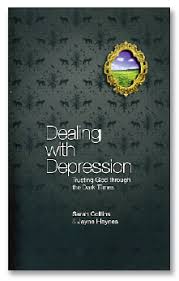
Dealing with Depression

We all know what it’s like to feel down. Some of us even know what it feels like to live with depression, or, as it’s sometimes called, ‘the black dog’. Indeed, statistics show that 1 in 4 people per year in the UK will experience a mental health problem. As Christians, living in this fallen and broken world, we too know what it is like to struggle with depression.  Despite what some popular teachers might say, Christians are not always going to be the happiest people in the world – we are just as susceptible to depression as everyone else.

Dealing with Depression is a short and helpful book that explains the symptoms, the emotions that people can experience, and some of the practicalities surrounding depression. This book is not a self-help book, but rather a short introduction to the topic designed to help both the person suffering with depression and those who want to care for loved ones.

The authors offer both straightforward explanations and practical advice for those seeking to care for people who struggle with mental health. As Christians we want to be as equipped and informed as possible to help people who struggle with depression. This book gives some good advice on how to ‘walk with people’, as well as suggesting things to say and things not to say. Depression can often make you feel as if you are alone and our desire as Christians should be to support, care for and walk with our fellow brothers and sisters in Jesus.

When reading the book, and the short testimonies in it, I was struck by how many people said that time with friends and family was such a help to them. This was quite a challenge because I had to question how much I ‘walk with’ people I know who have mental health problems.

When was the last time we met with someone just to listen and spend some quality time with them?

Spending time with someone and reading the bible with them, filling their minds with gospel truths, building them up in their knowledge of the character of God and pointing them to the magnificence of God’s Grace is vital.

Not only does this book give practical insights into depression but interwoven throughout are testimonies of people who have both experienced depression and cared for loved ones as they have lived with depression. Often the misconception is that there aren’t many who have suffered with depression but the truth is that there are so many Christians, both well-known and not so well-known, who have struggled and have been very open about their experiences.

I thank God for the people who have opened up about their experiences of depression to help those who suffer and those who care for others, without their help and insights we would be less informed and less able to ‘walk with’ and to love our brothers and sisters who struggle.
If you have depression, if you have a friend or family member with depression or if you want to be able to care for people in a more informed way then pick up this book and have a read.

Rating 4/5

How seriously do we take sin…

This week I have had the privilege of spending the best hours of my day thinking through the book of Joel, and particularly the first chapter. When it comes to the minor prophets, from my own experience, not many Christians feel like they are on comfortable ground, often thinking that they can be obscure and strange. However, if we are to learn from the entirety of God’s word and if we truly believe that “All Scripture is breathed out by God and profitable for teaching, for reproof, for correction, and for training in righteousness” (2 Timothy 3:16) then we also need to think about the minor prophets.

The first chapter of the book of Joel tells the tale of our human hearts and calls us to wake up to the seriousness of our sin. Too often I have heard people say that they are willingly and knowingly going to sin because “Jesus will forgive me anyway”, that is a seriously slippery slope to be on. Jesus calls his followers to a radical way of living where you ‘cut off’ what causes you to sin (Matthew 18:8-9). I think that we are in danger of people too comfortable with sin.

Joel chapter one calls a sinful people to wake up and realise their sin, to stop trying to escape the reality and seriousness of their actions, and whilst there are many differences, this is such a relevant message for the church to hear today.

How often do we play with sin, thinking that we are stronger than our fallen nature and that we can poke the snake without being bitten? As Christians our desire should be to live lives that glorify God, lives that point people to see that we are different and we serve God not our own hearts desires.

But we can’t stop there…

Yes, we must recognise the seriousness of sin but we also need to see the greatness of our saviour! As a Christian I believe that Jesus took my punishment on the cross, that he bore the wrath of God so that I could be declared free from my deserved punishment. Jesus bore the whole punishment for my sins, and that was costly.

I wonder how our attitude to sin would change if we took time each day to consider the cost that Jesus paid on the cross, would it make us want to sin less and love Jesus more? I think it would!

And how often do we pray for the Spirit’s help to transform our hearts and actions to be more like Jesus?

The book of Joel is a gem and I am looking forward to our short sermon series on it.

Let’s not run away from the difficult parts of the Bible, but let’s wrestle with them, learn from them and challenge each other as we grow together through reading them.

God’s Word is challenging, and I have been challenged by Joel 1 to ask myself how seriously I take my sin.

If I’m honest I don’t take it seriously enough, in my preparation for preaching Joel 1 I have been challenged to see the damage that my sin has caused but I’ve also been blown away by the grace of God for sending His son so that a sinner like me could be forgiven.