Seeking Allah, Finding Jesus

I haven’t read a book about somebody’s journey to faith in a long time, I almost forgot how great they can be. Most of the time I read theology books, books about Christian ministry, or Christian living books that I’ve been given to review.
Recently a friend of mine read Seeking Allah, Finding Jesus and said that it was a tremendous book and that I should give it a read, and I’ve had it on my ‘to read’ list for a while now.

Being raised in a relatively normal British household (whatever that might mean) and being brought up in church, my knowledge of Islam is very limited and my only point of reference is really what I have learnt in my theological studies over the past 5 years and my interactions with a few Muslim friends.

Seeking Allah, Finding Jesus is much more than the story of Nabeel Qureshi, a Christian apologist who was born and raised in America to Pakistani parents. The book gives you great insights into Islam, the Koran, Muslim’s views and thoughts about Christians and how to engage with Muslims.

Qureshi was the eldest son of Pakistani immigrants and grew up in the United States and the UK; his father was in the US Navi so they travelled around. He was raised a devout Muslim, brought up to revere the Koran, to learn Muslim history and to be able to recite and defend much of the Koran and Muslim faith. Throughout this book he speaks about his religious devotion and his desire to be the best Muslim he could. Whenever he met a Christian he would engage in discussion/debate about the validity of Christianity and, in his mind at that time, the unfaltering truth of Islam.

Upon going to college Qureshi met a man called David Wood and they became great friends. David was a Christian and as you can imagine the debates about faith started almost immediately.

After years of debating and discussing Christianity with different people, from the ‘average Christian’ to well-known apologists, Qureshi started to seriously think that Christianity could be true. This however, was not a decision that he could take lightly.
When people become Christians from a Muslim background it is not a simple ‘change of religion or worldview’, very often their whole world is changed. Sometimes people are rejected by their families and, depending on the country you live in, becoming a Christian could mean imprisonment, punishment or even death.

This book gives you an insight into the Muslim view of Christians and it gives practical advice on how to reach Muslim friends with the Good News of Jesus. Qureshi also explains the differences between first-generation Muslims and their children. Qureshi explains that in the West we have a very scientific approach to evidence and worldviews, often looking at facts and history and then coming to a conclusion on a topic. But in the East generally, Qureshi explains, the weight is put more on authority and reputation. These differences have huge implications for how Christians should engage in conversation with Muslims, often we can look at the same thing but our worldviews and where we put our focus (authority or fact) mean that we can go around in circles debating.

Qureshi’s book takes a clear and logical look at both Christianity and Islam whilst telling his own life story. Qureshi died in 2017 after a year battle with stomach cancer, he is now in glory rejoicing with the Lord and his testimony continues to challenge both Christians and Muslims and encourages fruitful discussion.

I have found Muslims to be wonderful loving people who are kind, very hospitable and always willing and open to discuss matters of faith. I pray that as Christians we would seriously think through our faith, that we would be able to defend and engage in such conversation as Qureshi had with Wood, and that God would work through this book.

Rating 5/5

The Dignity Revolution

If you look at our world and see all of the injustices and wrongs that are committed against humanity, it won’t take long for you to realise that we need to come back to the truth that humanity is made in the image of God. Christians should loudest voice at the very forefront of every battle arguing for the dignity of humanity because of the glorious truth that we are all made in the image of God.

In a world that constantly tells us that we are the most important person and that we should be our main focus the need for our identity to be grounded in our Creator is very real.

We only need to turn on the news and we can see how little people actually think of human dignity, whether that’s the statistics of murders, abortions or wars, it all indicates that different people are of different worth in the eyes of others.

When I first picked up Daniel Darlings book The Dignity Revolution I thought that it might be an interesting read but not anything that is extremely important, then I started reading…

Darling starts by looking at the biblical truth that, as humans, we are made in the image of God. Whilst every Christian probably subscribes to this truth the implications of it are sometimes lost, look at history and that is definitely the case. Some Christians in the past have argued that slaves and people of other colours are lesser beings and not made in the image of God as much as they are. Terrible injustices have been justified because people lost touch with the biblical teaching of image-bearing.

Maybe you think that this is not such an important topic, but Darling does not shy away from big issues and shows how the need to return to the Bibles teaching on this issue affects things like racism, abortion, human trafficking, sexuality, pornography, justice systems and prisoners, the refugee crisis, euthanasia, end-of-life care, illness, disability, the role of technology. All of these things are an indication of our view of others and as I look at our world, like Darling, I see the need for a monumental change.

This book is written in the context of the United States, but it is just as applicable and insightful for every other country in the world.

One of the biggest questions that I see many people in this world and particularly those of my age asking is what does it mean to be human, in other words who am I and why I am here. This book is very easy to read and has a compelling argument for human dignity, something that we can no longer take for granted. Furthermore, it is also very practical and gives examples of the implication of not having a robust view of human dignity that is founded on the Bible’s teaching on humanity.

Imagine a world where we viewed others as the image bearers that they are and treated them accordingly, our relationships would change, our churches would change and God would be gloried. This book encourages us to stand up for the vulnerable, to be a voice to those who are not being heard and to be an advocate for those in need of our help.

If you want to make a difference in the world, or if you are facing an issue that is difficult and addressed in this book then I highly recommend you read The Dignity Revolution.

Rating 4/5

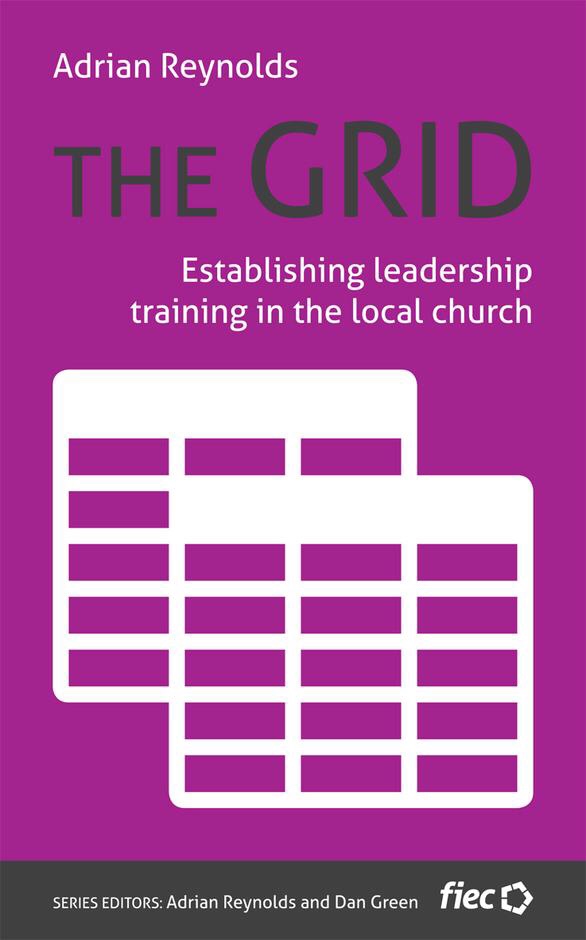
The Grid

Training has finally become a big focus of many churches, people are seeing the benefit of having Christians work in a church to gain practical experience whilst studying theology or doing some form of biblical studies. This truly is a great development, the benefits of which might only be seen in 20, 30 or 40 years. But this isn’t new either…

Churches have been training people for years whether they knew it or not. Every bible study teaches hermeneutics, every sermon teaching biblical theology, every conversation teaches apologetics… and the list goes on.

The more recent development is that there are plenty of books being published that seek to help people train others and to train themselves.

As Adrian Reynolds states in his book The Grid, training is not just important but it is actually a command.

Having spent time in training churches and most recently being part of a team setting up a training programme, I was delighted to receive a copy of this book to read. Training is something I am passionate about because the more people we train the more gospel workers can hit the harvest field that we call home.

This book is short and practical, it starts by saying how training is not just for those in ministry but it is part of everyday life for every Christian. Our being made more into the image of Christ daily through the work of the Holy Spirit is training… and it isn’t easy… but by the grace of God we love to learn each new day.

Reynolds starts of by looking at how we think about training, sometimes people start by created a programme and then eventually come to the vision. However, Reynolds rightly says that we need to start with the vision, begin at the end, and think through what you want the outcome of your training to be. Then do the painstaking task of honestly and humbly figuring out where you currently are. I say painfully because admitting that churches need to improve, thinking through strengths and weaknesses is not easy especially because often it can feel personal.

Once you’ve done that you’re ready to think about how to train people.

Reynolds has come up with a grid (hence the name of the book) to asses the training needs, but also the areas for development in both individuals and ministry teams.

I will say that there was nothing new in this book really, it is a good practical book and helpful maybe for those just starting to think about training. I’m not quite sure who the intended audience are.

This little series by the FIEC and 10ofThose is good and full of helpful short books, but if they are aimed at pastors then they should be longer and a bit more in-depth. But, if they are intended to encourage a church member to think about training in an easy and not daunting way, it hit the nail on the head.

Both the FIEC and 10ofThose do tremendous work to equip and encourage Christians across the UK, if you haven’t heard of them or used any of their resources you’re missing out.

Rating 3/5

The Art of Rest

Over the last few weeks my wife and I packed our entire life into boxes, done multiple car trips across Edinburgh, moved 50+ boxes, over 800 books, furniture and walked up three flights of stairs more times than I can count – and during all this I read a book on rest. Ironic, I know.

As a person who loves my job and who doesn’t always see it as ‘work’, rest is not easy. I’m a ‘doer’.  I like to tick things off my to-do list app and hear the satisfying ping that it makes. I enjoy filling my diary with planning and pastoral meetings; I really enjoy working. However, this can also be a problem because I have the tendency to take on too much and work too hard, meaning that I do so many different things and can become quite stressed from time to time.

I realised that I needed to read The Art of Rest.

I am always weary when I pick up a book on rest and in the back of my mind I’m wondering if it’ll be a pitch for a legalistic view of the Sabbath based on the Old Testament laws and the nation of Israel. I have read many books like that, and Mabry’s book does not fall into that category at all.

Many people think that just sitting in front of the TV is rest, or simply sitting doing nothing is rest, but Mabry looks at the purpose of rest from a Biblical perspective, and that is a breath of fresh air in a world which idolises busyness. In six short and very readable chapters Mabry takes the reader on a journey to see what true rest really looks like and what the purpose behind it is, and he gives his four R’s of rest.

Rest allows remembering, rest is resistance, rest restores relationship and rest brings reward.

Rest is such an important part of life, it has been woven into the fabric of human existence. If we do not rest we will not only damage ourselves but even those around us. One of the very convicting parts about this book was the attitude that Marby sees behind a lack of rest. If people refuse to rest often an attitude of  stubborn independence, of “I don’t need help, I can do all of this on my own” lies behind it.

“Resting requires you to admit that you are not sufficient,
and to acknowledge that there is One who is”

Often Christians can feel guilty about resting, or feel that they can’t rest because they need to be doing all they can do for the Kingdom of God; or they swing the other way and think that on a day of rest there shouldn’t be any Christian element involved. However, true rest should not exclude Jesus but it should include Him, it should not be resting from the bible and time spent with God but it should be time rest according to the bible and a time resting in God.

In this world which seems to get busier with every moment, in this world which puts such an importance on work, taking time to stop and read this book could greatly benefit you, your relationships and your health both physically and spiritually.

Rating 4/5

How to Grow

Discipleship can often be a forgotten word in the church today. We talk a lot of evangelism, love for Jesus and His church, love for the Bible and all of these are great and very important things to be discussed, however, not at the neglect of discipleship.

It is amazing to see a person come to faith and to see their lives transformed by the Holy Spirit, but how often is that all we talk about? Shouldn’t our celebrating be followed up by a passion to see these new believers grow? This is what God wants for all of His people, not just new believers, whether you’ve been a Christian for 6 minutes, 6 hours, 6 Years or 66 years, are you growing in your faith?

Dash says that “God made us to grow. It’s important to understand what growth is, and the pathway He’s designed for growth.”

This little book gives a very practical, habit-based way for every Christian to grow spiritually. Dash is very direct at saying what spiritual growth is not; it isn’t reaching a new level spirituality in a kind of ‘levelling up’ way, but it means to constantly return to the ABC’s of the gospel and grow in them and their applications. Spiritual growth is not something that we can muster up by ourselves, it’s not a form of self-help but it is an utter dependence and reliance on God and His grace.

“Any attempts to grow apart from God are doomed to fail.”

Often when it comes to things like discipleship Christians tend to focus on the individual, but spiritual growth is not about the individual rather it is about God. As we grow we become more like Christ, we grow in our love for God and our love for others, spiritual growth is God-centred.

One of my favourite quotes from How to Grow is…

“Spiritual maturity isn’t about white-knuckling it to sainthood. It’s about becoming a person who is fully alive. It means enjoying God and life in deeper and more abundant ways even in the middle of difficulty. It transforms our desires rather than denying them. Spiritual growth is the pursuit of God, and the pursuit of joy.”

 So  spiritual growth is not about us, but it also doesn’t only affect us, people are watching us and we can either be an example for people, or we can be a hindrance. As we grow in our faith and in our maturity, shouldn’t our desire be to live godly lives for those around us?

So, how do we grow spiritually? What is the magic formula?

Well, there isn’t one but Dash gives some really good practical habit-based steps that can help us all grow. Books on discipleship can often aim their practical steps either too high or too low for the average joe, which can result in them feeling disappointed and worthless. But Dash encourages you to shrink down a new habit until you are confident that you can do it every day.

This book is helpful and honest, it’s written by a man who has a pastor’s heart and he shows that in this book. In this world where we want everything now, where we almost live our lives on auto pilot, take time to read this book that will give you sound and biblical steps to grow. If you want to grow, or want to help other grow pick up this book and read it, maybe even read it as a group and grow together.

Rating 4/5

Take Heart

There is no denying that Christianity, at least in the West, is taking a bit of a hit. Christians are being called bigots, fundamentalists and judgemental. The church is no longer seen as the compass of morality, and in this world ,were to offend people seem to be the worst crime, those who do not agree with the church and the teachings of Scripture are marginalised.

There used to be a time when Christianity was at the centre of our society. It was seen as normal to be a Christian, but this time is long gone. Today we live in what conference speakers and authors call a ‘post-Christian culture’, today it is no longer seen as the ‘norm’ to be a Christian or to go to church. Rather, Christians can be seen as strange or bigoted because of our stance on what the bible teaches.

“Unless you want to place your head in the sand and leave it there, there’s no denying the fact that fewer and fewer people are claiming to be Christians throughout the West, and that Christians are losing social status and favor more and more, almost by the day.”

How should Christians deal with this truth? Should we run and hide, lock our church doors and hope for the best? Or should we do, what some have sadly already done, and conform to society?
Matt Chandler says that as we look at our culture, as we see how the church seems to be more and more marginalised, Christians should Take Heart. In these times of change and as the church gets pushed closer and closer to the edge of society Chandler calls Christians to have courage.

How is that possible you might ask? Well Chandler takes you through church history and he calls the reader to look up to God, to see and know that He is sovereignly in control of all things.

Church history shows that the church has grown and thrived most during times of pressure and marginalisation and has actually deteriorated and become more self-focused rather than Christ-focused during time when society was ‘Christian’.
The church thrives in the margins because it causes Christians to look and depend on God and to find their hope and courage in God. As you feel the pressure at work, as you’re questioned by friends or family members because of your faith or as you take a stance because of what you believe, the bible teaches look to God and take courage!

We can have courage when we have a great view of our great God because as Chandler says:

“if we have a God-sized, God-given courage, then we will be freed up to be the people of God, living out the mission of God, marked by the joy of God.”

This is a very helpful quick read that puts our culture in its context, helps us understand church history and gives practical insights into how to live as a Christian in a world that is trying to fight Christianity and forget about God. If you are struggling this book will give you hope, it will cause you to look to and depend on God and, as it says on the tin, it will give you courage to live in this world and age of unbelief as you serve the Lord.

Rating 4/5

Always use the Bible…

As a Christian my go to book is always the Bible.
If someone has a question, we look at what does the Bible say on that particular topic.
If someone is troubled by something, we look at what the Bible has to say on that particular topic.
If someone is trying to make a decision, we look at what the Bible has to say on that particular topic.

I have the privilege of spending the majority of my time throughout the week reading the Bible. I read the Bible for my own personal devotional life, for Bible study prep, for sermon prep and for meeting one on one with others. Why do this?

I do this because I believe that the Bible is the Word of God, it is God’s revelation of Himself given to humanity so that we may know Him. Therefore, when I meet with somebody my priority is to read the Bible with them, to let God do the talking.

I’ll also talk about life with the person and get to know their struggles and their lives. But the primary concern for every Christian should be to open the Bible.

Why? Because in the Bible we hear God speaking, in the Bible we have the Word of God that is “breathed out by God and profitable for teaching, for reproof, for correction, and for training in righteousness” (2 Timothy 3:16).

If Christians don’t use the Bible to do these things (teach, reprove, correct and train) then we end up trying to use our own words and advice.

Do we really know better than God does?

The Bible is the main authority over a Christian’s life and we should be using it in every circumstance we can.
This should stops us from giving bad advice, from jumping on our hobby horse topics and from keeping the focus on ourselves. Instead, the Bible lifts our eyes up to see the glory of God and the magnificence of the gospel through Jesus.

The Bible makes us to ask difficult questions and that can sometimes be uncomfortable, but it is also encouraging.
One of the phrases I love to hear when reading the Bible with someone is “that’s a hard question!”
This can be referring to a question about the meaning of a passage, an aspect of theology that is in a passage, or the application of a passage.

I always start a one to one by reading Mark’s Gospel and time and time again I find myself learning new things, new insights and being challenged all over again.

Dear Christian,
Remember that you will always be a student of the Bible! Always read and reread and never assume that you know a passage.

As Christians we should be using the Bible as our primary resource when we disciple people and all the time praying that the Holy Spirit would convict people of their sin, build them up in their knowledge and love for the Lord and help them mature in their faith.

This is not something that we can conjure up by using our own words and nice ideas, but this transformation can only come by God who through the Holy Spirit makes the Bible understandable and applicable to people’s lives.

Use the Bible in one to ones, and as you visit friends, and as you pray with people because the Bible is what teaches, reproves, corrects and trains in righteousness.

The Porn Problem

There are many topics that Christians feel uncomfortable talking about. These range from mental health to sex, and from gender to death, but Vaughan Roberts is tackling these topics with his series ‘Talking Points’.

Currently the series has three books – Transgender, The Porn Problem & Assisted Suicide.

Each of these topics can be referred to as a ‘hot topic’ but we need to talk about them.

The Porn Problem is a very short book designed as an introduction to the problem of pornography (as it says on the tin!), but this is not a ‘look at how bad the world has become’ kind of book, instead it focuses on the impact porn can have on the church and on Christians.

Vaughan starts by placing sex into the context that God designed it for, that it is to be enjoyed within a marriage between one man and one woman.

There are many markings in my copy of The Porn Problem, too many to put in this short review, but this sentence is so counter-cultural that it must be quoted

“Sex is not simply recreational; it is profoundly relational”

Sex is a good gift from God, it is more than just a physical act between two people, it has a purpose and it has boundaries.

Vaughan explains the beauty of sex when enjoyed as God intended, and then he goes on to explain the ugliness of porn and the damage that it can cause. Generally speaking people might think that porn is harmless, but it cheapens sex, objectifies people and can cause serious emotional damage, and it can lead to physical complications.

As porn is not something to play around with, is addictive and dangerous, I think that Christians need to speak openly about it. Not only young men are lured into the snare that is porn, it affects people from all stages, ages and sexes. Vaughan’s book has great statistics of how wide-spread the porn problem is, statistics of how damaging it is for people, and the book is realistic about the struggles of breaking the cycle of porn addiction.

But The Porn Problem doesn’t leave you in desperation scrambling for answers or scouring the shelves for self-help books, it leaves you with the truth that freedom from porn is possible, that there is such a thing as freedom from this addiction that plagues so many people.

Vaughan gives a good further reading list if you want more than a brief (very brief!) introduction to the topic and has practical advice (software, etc.…) that can help people guard themselves to a degree from porn, ultimately the person needs to see the damage that it causes and their need of freedom.

This book asks and answers hard questions about porn and gives good insights for how to help others as they wrestle with the problem of pornography.

If you have a spare afternoon, if you struggle with watching pornography, if you want to help others in your church or community, pick up this book and read it, and be open to talk to people about an uncomfortable topic. Christians should be leading the way by helping people to overcome their addictions and caring for them in every way possible, so start that conversation, ask that question and start helping.

Rating 4/5